
As it readies for its initial public offering (IPO) later this year, digital payments firm Paytm is honing its strengths to remodel itself from being a payment wallet to becoming a financial services provider, and is working towards narrowing its losses, evident from its most recent Annual Report. Unlike many of its peers, Paytm has started expanding its merchant payment ecosystem. It has realised that though it can take the maximum share of the Unified Payment Interface (UPI) transactions, from a revenue generation point of view it will not have any impact.

Airlines are slashing salaries and re-negotiating vendor contracts as drastic fall in passengers has hurt revenue. Go First has cut staff salaries by around 16 per cent while IndiGo and SpiceJet are enforcing a leave without pay (LWP) policy and pay by the hour structure respectively to prune expenses. Vistara, which reversed pay cuts for junior staff including managers and cabin crew in March, is not touching employee salaries at the moment and instead focusing on vendor renegotiation and maximising cargo revenue. An Air India executive said efforts are on to pay salaries by 7th or 8th of June.

Zerodha will not raise external funds now or in the future, because it is profitable and has zero debt.

Digital payments provider Paytm is all set to make its market debut as early as this year, with an aim to raise $3 billion (around Rs 22,000 crore). If successful, this could be the biggest initial public offering (IPO) by an Indian company, breaking Coal India's 2010 record of Rs 15,475 crore. According to media reports, the board of One97, parent company of Paytm, is all set to meet this Friday to formally approve the IPO plan.

EU and UK laws require airlines to incorporate data protection measures and report data breach to regulators within 72 hours. Non-compliance can invite steep fines.

As the deadly second wave of the Covid-19 pandemic rages on, startups and technology firms are realising the burnout effect it is having on employees. Many have shortened their work weeks to four days, while others have made provisions for more time off for employees to help them rejuvenate or care for loved ones.

The US government has removed a regulation proposed by former president Donald Trump's administration that sought to narrow the definition of "specialty occupation" under the H-1B visa regime. The change comes as a relief for Indian information technology firms, which are among the largest users of such visas. "The Department of Homeland Security (DHS) has formally vacated a regulation that would have redefined the H-1B specialty occupation, restricted off site placement of H-1B employees, and otherwise increased employer compliance obligations. "The vacatur follows a federal court ruling that set aside the regulation because the agency did not have good cause to bypass notice and comment rulemaking, in violation of the Administrative Procedures Act," explained immigration law firm Fragomen.

With scrutiny that comes with a public listing, Deepinder Goyal's leadership could face its sternest test yet.
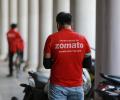
Zomato said it has consistently gained market share over the last four years to become the category leader in the food delivery space in India in terms of gross order value from October 1, 2020 to March 31, 2021.

To be able to manage any such uptick, Indian IT services players are hiring more locals, and relying on hybrid work models.

Home ministry asks IT ministry to order social media platforms to remove around 100 posts or URLs.

Amid oxygen shortage and a faltering health system in the country, India is seeing over 300,000 cases daily.

Infosys, Facebook, Genpact, and Cognizant, among others, have reached out to employees and offered support in different ways as the second wave of Covid cases sees an exponential rise. Companies are asking employees to stay indoors and prioritise the health and safety of their families. This is of significance as several information technology firms were going to take a call on work-from-home from June and had plans to allow some employees to come back to work.

Domino's India data that included sensitive customer information such as their names, phone numbers, and credit card details has allegedly been breached and put on sale on the dark web. According to tweets by Israel-based Co-Founder and Chief Technology Officer of cybercrime intelligence firm Hudson Rock, Alon Gal, the data is worth 13 terabytes (TB). He tweeted on Sunday that the data includes as many as 180 million order details, including 1 million credit card details. The data, said Gal, was up for sale on the dark web. The threat actor, he said, was asking for $550,000 for the data.

The Russian vaccine has been registered in more than 55 countries and is gaining recognition in the virtual world -- being the only to have its own Facebook page, YouTube channel and a Twitter handle, reports Aneesh Phadnis


According to the order, all factories producing essential goods and services will remain operational at full capacity.

The content eligible for review includes posts, status updates, photos, videos, comments, and shares.

'Traders have stocked up for upcoming festivals and will make a loss if stores remain shut now. We suffered last year. We can't suffer again. There is no scientific basis for closing all commercial establishments. How long will the government keep them shut?'

One reason for the surge in cases is the spread of infection at large weddings. Weddings turned out to be super spreaders.
 © 2025 Rediff.com - Investor Information - Advertise with us - Disclaimer - Privacy Policy - Sitemap - Feedback - About us - Terms of use - Grievances